Controversy: Yastika Bhatia Retired Out, Then Slammed By Harmanpreet Kaur
Strategic Move Backfires as India Levels Series Against England
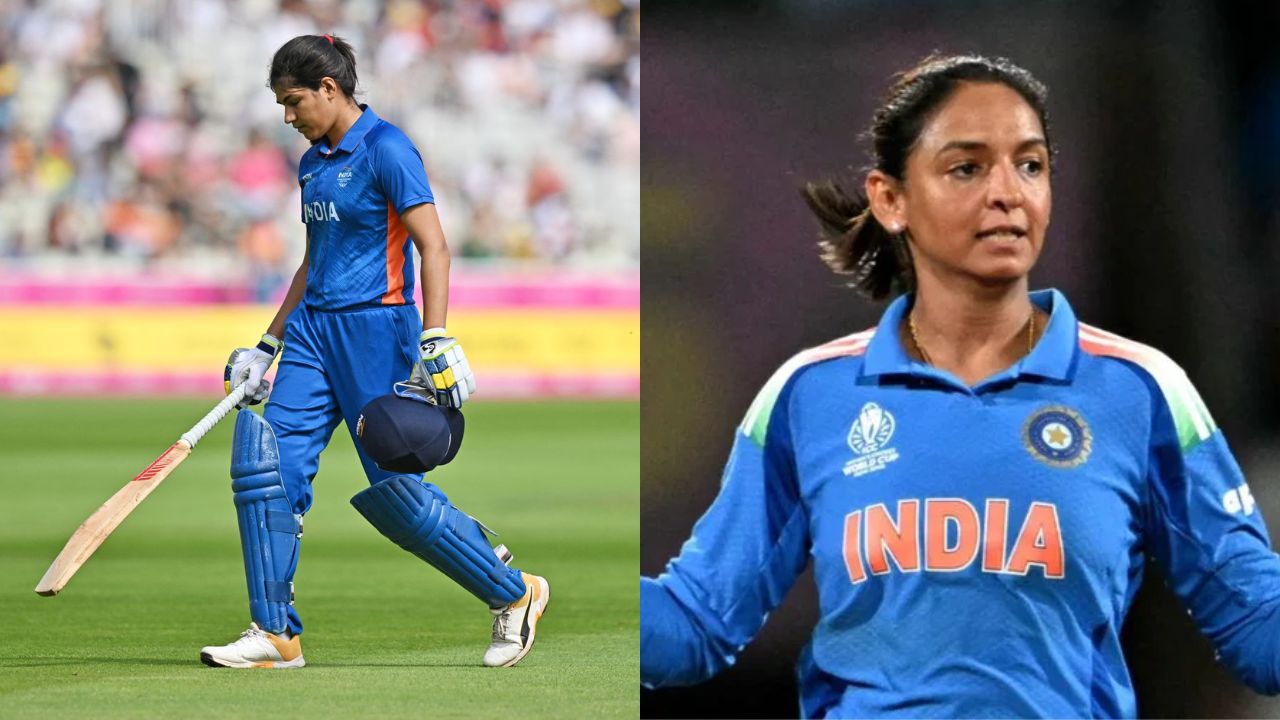
The strategic nuances of T20 cricket were on full display during the second T20I between England and India in Bristol. What began as a crucial encounter for the series lead, quickly became a talking point centered around a unique tactical decision. India’s top-order batter, Yastika Bhatia, found herself at the heart of this discussion after being retired out, a move that stirred considerable debate and was later addressed by captain Harmanpreet Kaur, who admitted Bhatia looked out of sorts.
This incident highlighted a growing trend in the fast-paced world of T20 cricket, where teams are increasingly willing to employ unconventional methods, such as retiring a batter, to optimize their chances of winning. For India, this decision came as they sought to clinch the three-match T20I series and build momentum ahead of the upcoming ICC Women’s T20 World Cup. However, the outcome saw England successfully level the series, setting up a thrilling decider.
England’s Resilient Recovery and Freya Kemp’s Heroics
Having lost the series opener by a significant margin of 38 runs, England came into the second T20I with a clear intent to bounce back. After winning the toss and electing to bat first, they faced an early challenge, struggling to accelerate in the initial phase of their innings. However, a remarkable recovery was orchestrated by Freya Kemp, whose swashbuckling unbeaten knock of 39 runs from just 13 deliveries proved to be the pivotal factor in shaping England’s formidable total. Kemp’s innings was a masterclass in aggressive T20 batting, featuring four boundaries and two towering sixes.
Kemp arrived at the crease with England at 116/4 in the 16.3 over, a respectable but not yet commanding position. Her explosive hitting transformed the innings, adding crucial runs in the death overs and propelling England to a competitive total that ultimately proved beyond India’s reach. For India, Sree Charani was the pick of the bowlers, delivering an impressive spell of 3/25 from her four overs. She was ably supported by Nandani Sharm and Shreyanka Patil, who each secured a wicket, but they couldn’t contain Kemp’s late surge.
India’s Chase Falters: The Yastika Bhatia Conundrum
In pursuit of England’s 169, India’s top four batters all managed to get starts, each scoring over 20 runs, which initially suggested a strong foundation for the chase. Shafali Varma provided a quickfire beginning with 22 runs from 14 balls before her dismissal at the end of the third over. Smriti Mandhana and Yastika Bhatia then stitched together a 43-run partnership, taking the score to 70/2 by the 8.6 over mark when Mandhana departed.
At this juncture, India required 99 runs from 66 deliveries, a target that appeared eminently chasable given the depth of their batting lineup. However, the momentum began to wane. Yastika Bhatia, who had previously shown excellent form, including a fifty in the first match following a lengthy injury layoff, found herself struggling significantly at the crease. Despite her recent performances, Bhatia could not find her rhythm in Bristol, failing to connect effectively with the ball. Her struggle became increasingly evident as her innings progressed, culminating in a score of 33 runs from a laborious 36 balls at the end of the 15th over.
It was this inability to accelerate that led to the strategic, albeit controversial, decision to retire her out. The intention was to inject some much-needed impetus into the innings, bringing in a batter like Jemimah Rodrigues, who had demonstrated good form in previous outings. However, the plan did not yield the desired results, as Rodrigues herself could only manage 1 run off 2 balls before being dismissed in the very next over, adding to India’s woes.
Harmanpreet Kaur’s Assessment and India’s Overall Collapse
Following the match, captain Harmanpreet Kaur addressed the media, offering her perspective on the decision and Yastika Bhatia’s performance. Kaur openly critiqued Bhatia’s knock, acknowledging her difficulty in connecting with the ball. She explained the rationale behind the retired out decision, stating, “Unfortunately, she [Yastika] wasn’t connecting the ball, and we felt Jemimah was someone who had scored runs in the last game, so we wanted to give her a chance. But I think it didn’t work for us.” This candid admission underscored the high-stakes nature of T20 cricket and the pressure on batters to perform at a rapid scoring rate.
India’s chase continued to unravel, with wickets falling at regular intervals. Harmanpreet Kaur herself, returning to the XI, contributed an underwhelming 28 runs off 22 deliveries before being dismissed by Charlie Dean at the end of the 18th over. Ultimately, India was restricted to 142/9, falling short by 27 runs. Lauren Bell, Charlie Dean, and Freya Kemp were instrumental in England’s bowling effort, each claiming two wickets to ensure their team squared the series.
All to Play for in Taunton Ahead of T20 World Cup
With the series now tied at 1-1, the stage is set for a thrilling final T20I in Taunton. This match will not only decide the series winner but also holds significant importance for India, as it will be their final international fixture before the highly anticipated T20 World Cup. Having recently achieved glory in the ODI World Cup, the Indian women’s team will be under considerable scrutiny to fine-tune their T20 game and build confidence heading into the global tournament.
The decider in Taunton will provide a crucial opportunity for both teams to assert their dominance and for India, in particular, to address any lingering concerns regarding their batting approach and strategic execution. Following this pivotal match, India will have a brief respite before their warm-up fixture against the West Indies in Cardiff on June 8, marking the final preparations for their World Cup campaign.