Taijul Islam Sheds Light on On-Field Confrontation with Shan Masood in Sylhet Test
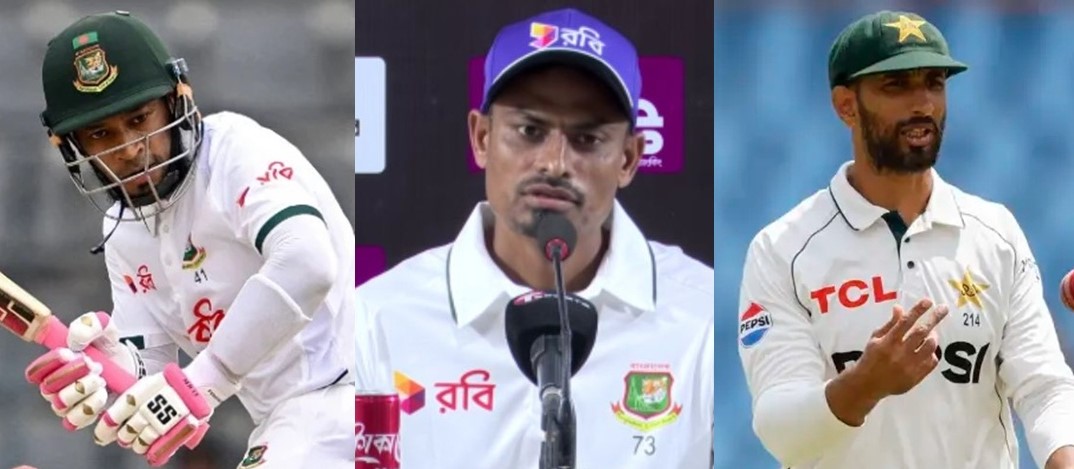
A Dominant Display in Sylhet
The Sylhet Test match has provided cricket fans with plenty of drama, not just in terms of runs and wickets, but also regarding the competitive spirit displayed by both Bangladesh and Pakistan. As the match progressed to its crucial stages, Bangladesh managed to set a daunting target of 437 runs for Pakistan, a figure that would require a historic, world-record chase from the visitors. At the heart of Bangladesh’s batting dominance was Mushfiqur Rahim, whose masterful century anchored the innings and allowed the hosts to pile on a massive total of 390 in their second innings.
The Partnership and the Tension
The third day of the Test was particularly defining, as Mushfiqur Rahim orchestrated crucial partnerships that effectively batted Pakistan out of contention. One of the most significant stands was the 77-run partnership between Mushfiqur and lower-order specialist Taijul Islam. It was during this phase that the pressure on the Pakistan side became visibly evident, resulting in an animated on-field exchange between Pakistan captain Shan Masood and the veteran Bangladeshi batter.
When questioned about the incident after the day’s play, Taijul Islam provided a calm and measured perspective. “When you are in a match, many things can happen,” Taijul noted. “They had been fielding for a long time, so maybe they lost a bit of temper. Mushfiqur bhai didn’t say anything. He was just talking normally with the umpire. I’m not sure what they understood, but they reacted in their own way.”
Dealing with Sledging
The intensity did not stop there, as Taijul also faced verbal barbs from Pakistan’s Saud Shakeel. According to Taijul, the interaction was centered on a misunderstanding of roles on the field. “What happened with me was—he told me to come and bat. But that’s not his job, it’s my job,” Taijul remarked with a hint of dry humor. When he subsequently struck a boundary, it was naturally perceived as a fitting retort, though Taijul remained humble about the shot, insisting that he was simply playing the ball on its merit: “When you go out to bat, these things happen… and the ball was there to be hit.”
The Value of Lower-Order Contributions
Beyond the minor confrontations, the series has highlighted a significant shift in Bangladesh’s approach to the game. Taijul’s 22-run contribution was vital in extending the lead, serving as a continuation of the support he provided to Litton Das in the first innings. The consistency of the lower-order has been a point of improvement for the team, and Taijul believes this is a result of a collective mindset shift.
“Earlier, there were some gaps in our lower-order contributions, so questions were raised,” Taijul admitted. “Now everyone is more serious. The coaching staff and players are very committed. If we can contribute even a little, it helps the team. It also helps us individually. If I can score 20-30 runs along with my bowling, that becomes a big advantage.”
Looking Ahead
With Mushfiqur and Litton both reaching triple figures, the Bangladeshi lineup has shown that they can handle pressure effectively. The maturity shown by players like Taijul Islam, who is primarily known for his left-arm spin, demonstrates that Bangladesh is no longer just relying on their top order. By taking accountability for their roles, the lower-order batters have successfully transformed into a reliable unit, providing the team with the depth required to compete at the highest level of Test cricket. As the match heads toward its conclusion, the focus remains on whether Pakistan can mount an unlikely challenge or if Bangladesh will capitalize on their hard-earned momentum.