Ravindra Jadeja At No.4? The Tactical Thinking Behind RR’s Surprise IPL Playoffs – Analyzing Rajasthan Royals’ Tactical Move: Ravindra Jadeja at No. 4 vs GT
The Tactical Curiosity of the Playoffs
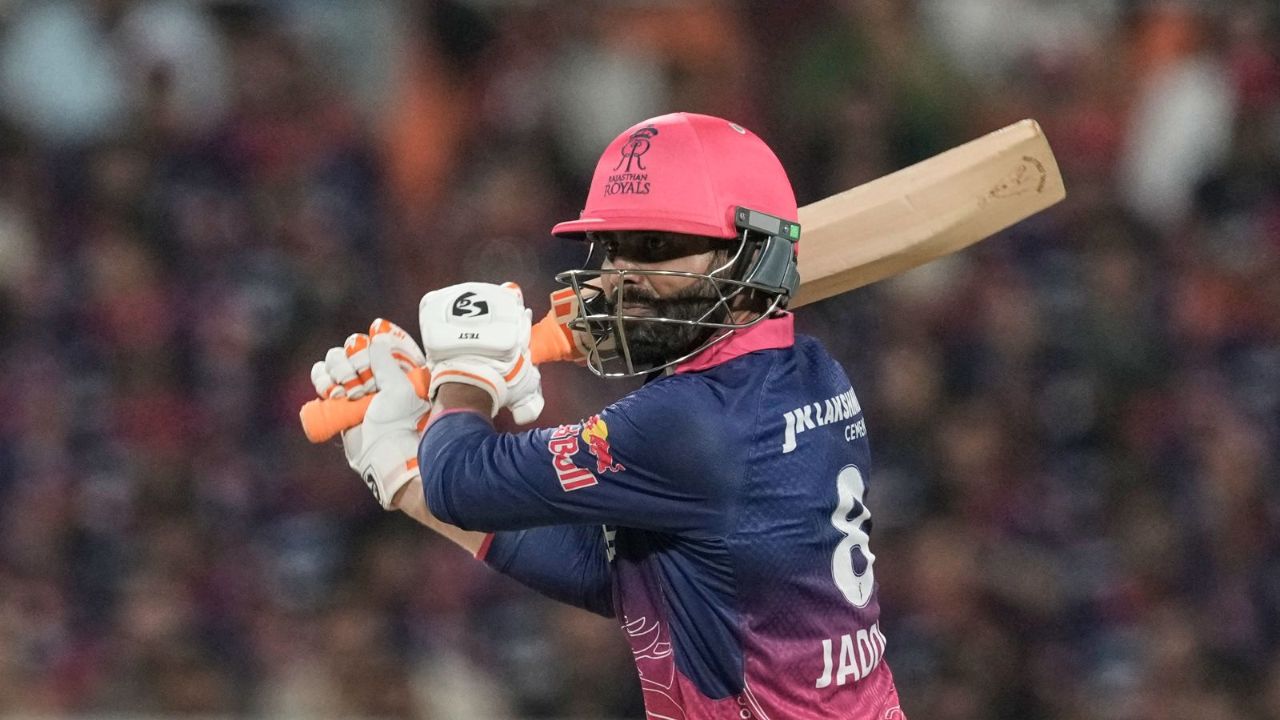
During the intense atmosphere of the IPL 2026 Qualifier 2, the Rajasthan Royals executed a move that caught the cricketing world off guard. Choosing to bat first against the formidable Gujarat Titans, the team management decided to promote Ravindra Jadeja to the No. 4 position inside the powerplay. This decision, made ahead of captain and middle-order stalwart Riyan Parag, sparked immediate debate among fans and analysts alike.
While the initial reaction may have been one of confusion, a deeper look into the team’s strategy reveals that this was not a desperate gamble, but a highly calculated tactical maneuver designed to navigate a high-pressure knockout environment.
Understanding the Numbers: Jadeja’s No. 4 Pedigree
The primary justification for this move lies in the statistical viability of Ravindra Jadeja as a middle-order anchor. Critics often view Jadeja strictly as a finisher, yet his record at the No. 4 spot suggests otherwise. Before this encounter, Jadeja had accumulated 414 runs in 15 innings while batting at this specific position, boasting an impressive average of 41.4 and a strike rate of 140.82.
These figures are not merely anecdotal; they represent elite consistency. Furthermore, his highest score in this role—an unbeaten 77 off 45 balls—demonstrates his capacity to anchor an innings while maintaining the tempo required in T20 cricket. By utilizing him as a ‘floater,’ the Rajasthan Royals leveraged a player capable of stabilizing a collapsing innings, a strategy successfully mirrored by other franchises this season when top-order wickets fall early.
The Strategic Reasoning Behind Protecting Riyan Parag
Beyond Jadeja’s personal metrics, the match situation against the Gujarat Titans played a pivotal role in the decision-making process. Having lost both Yashasvi Jaiswal and Dhruv Jurel within the first two overs, the Rajasthan Royals found themselves staring down the barrel of a collapse against one of the tournament’s most potent new-ball attacks.
The decision to hold back Riyan Parag was inherently protective. Reports regarding Parag’s fitness status have been a topic of concern throughout the playoffs. As the team captain, Parag has shown immense commitment by playing through physical discomfort. Sending him out to face the hardest, most movement-heavy phase of the game—the initial powerplay—would have placed unnecessary strain on his recovery and the team’s momentum.
Balancing Risk and Stability
By positioning Jadeja at No. 4, the team management successfully shifted the burden of absorbing early pressure onto a player with vast experience in high-stakes environments. Jadeja’s calm temperament allows him to weather the storm of a disciplined bowling attack, shielding the rest of the lineup until the ball loses some of its shine and the conditions favor middle-order batters.
Riyan Parag’s own game is better suited for the middle overs, where he can exploit spin, rotate the strike effectively, and build momentum before launching a final assault. The logic was clear: maximize the efficiency of the available personnel by playing to their specific strengths rather than adhering to a rigid, pre-set batting order.
Conclusion: A Calculated Risk
In the world of T20 cricket, where momentum shifts rapidly, the Rajasthan Royals showed a willingness to abandon convention in favor of situational awareness. While the move appeared unconventional at first glance, the combination of Jadeja’s statistical success at No. 4, the necessity to protect a less-than-fit captain, and the need to counter the Gujarat Titans’ early bowling onslaught provides a coherent explanation for the choice.
Ultimately, professional cricket is as much a game of chess as it is a display of athleticism. Whether or not the strategy yielded the desired result on the scoreboard is secondary to the fact that the management relied on data and match context to dictate their moves on the biggest stage of the season.