IPL Champions: Patidar on RCB’s encore: ‘We didn’t just play but we dominated’
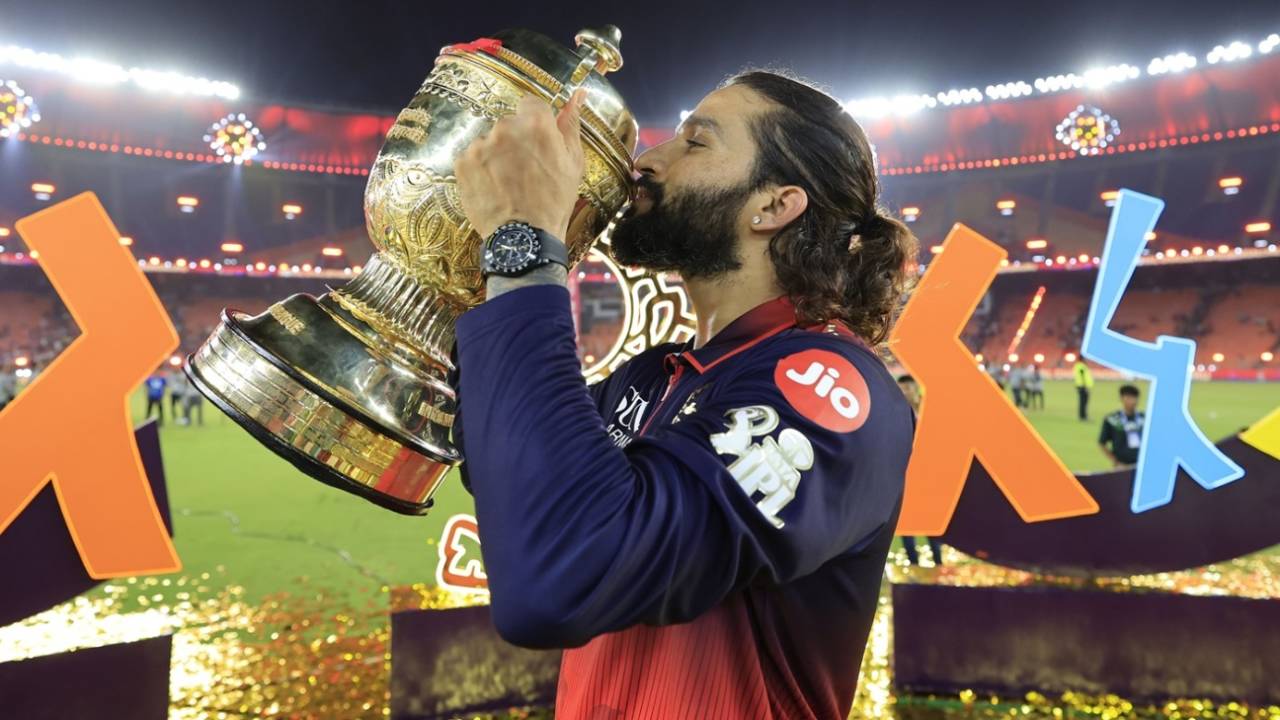
A broad smile illuminated Rajat Patidar’s face as he finally entered the press conference room in Ahmedabad, shortly after 1 AM on a Monday, the coveted IPL trophy by his side. For a man known for his reserved nature, this visible display of emotion was as eloquent as any words. His occasional glances and gentle touches of the trophy reflected the profound satisfaction of a captain who had just steered Royal Challengers Bengaluru (RCB) to an extraordinary second consecutive title.
The timing of this triumph added an extra layer of sweetness to the moment: it coincided with his 33rd birthday. “I’m feeling great… it’s a great feeling. It’s my birthday. There can’t be a better gift than this,” Patidar remarked, his voice tinged with joy. He further elaborated on his personal philosophy, stating, “The individual that I am, I always focus on living in the present. We have won back-to-back, we’ll celebrate but the focus will be how we can now do this three in a row. It can’t get better than this. When you win trophies, you don’t look at individual performances. Nothing is bigger than this.” This dedication to the team’s success and future aspirations underscored his leadership.
A Season of Dominance: RCB’s Unstoppable March
When asked to draw a comparison between the two championship journeys, Patidar highlighted a distinct difference in the 2026 campaign. He felt that this year’s victory carried an undeniable stamp of inevitability, largely due to RCB’s sheer dominance throughout the group stages. The team didn’t just secure wins; they did so with an authority that left little doubt about their ultimate potential. “Last year was a lot of pressure,” Patidar recalled, contrasting it sharply with the current season. “[This year] I was more calm. The way we played through the tournament, we didn’t just play but we dominated. I was confident if we played like this, we could win the second title for RCB.” This calm assurance stemmed from the consistent high-level performance exhibited by every member of the squad, translating into a powerful collective unit.
Patidar, while acknowledging his less expressive nature as a captain, emphasized his deep awareness of game situations. He credited substantial backing from both the management and his fellow players as crucial to his leadership effectiveness. This supportive environment allowed him to focus on strategic decisions and tactical execution, fostering a cohesive and confident team dynamic that was evident in their relentless pursuit of victory.
Balancing Batting Prowess with Captaincy Duties
One of the significant challenges Patidar meticulously addressed was the need to compartmentalize his roles as both a prolific batsman and a strategic captain. His commitment to enhancing his batting skills was evident in the extensive groundwork laid during the off-season. He worked diligently with veteran cricketer Dinesh Karthik, focusing on critical technical adjustments and trigger movements. This dedicated preparation paid dividends handsomely throughout the season, with Patidar achieving his best returns since his debut in 2021, scoring an impressive 501 runs at a staggering strike rate of 192.69.
“I took a lot of learnings as captain and batter,” Patidar explained. “I look at how much time I give myself to bat, I spent a lot of time at the nets before the season…just me and the bowlers. There was a lot of communication with DK bhai, regarding my trigger movements and some technical adjustments. When I came to the IPL, I continued that and was able to execute. That gave a lot of clarity to me as a batter.” Beyond his personal performance, Patidar also drew inspiration from former captain Faf du Plessis, observing his composed presence and confident body language. “As captain, I learnt a lot of Faf du Plessis, how he presents himself, how his body language is always confident. That has taught me a lot,” he added, highlighting the continuous learning curve even for a successful leader.
The Unsung Heroes: Coaching Staff’s Crucial Impact
Patidar was also effusive in his praise for the dedicated efforts of the coaching staff, singling out Omkar Salvi, the bowling coach, for his exceptional contributions. In a team adorned with a star-studded coaching panel, Salvi’s influence, particularly on the younger players, often remained understated. However, Patidar underscored Salvi’s pivotal role, noting the remarkable season enjoyed by Rasikh Salam, who emerged as the team’s second-highest wicket-taker with 19 wickets, trailing only Bhuvneshwar Kumar.
“I’ve seen Omkar Salvi sir from my first Ranji season [in 2015],” Patidar shared, emphasizing their long-standing association. “He spends lot of time one-on-one with every bowler. There is a lot of hard work that Salvi sir has done for the team. You won’t see him in the meeting room, he spends time one-on-one with the bowlers.” This personal investment in each bowler’s development was clearly a cornerstone of their success.
Further appreciation was extended to Andy Flower, another esteemed coach known for his humility and preference to direct attention towards the players rather than himself. Patidar lauded Flower as one of the finest coaches he had ever worked with. “I’ve played five seasons of the IPL and he is one of the best coaches,” Patidar affirmed. “The way he handles players, not only those who play. For him the players who aren’t playing, the first-timers, he spends a lot of time with every individual. I don’t have words to express, but he’s the best coach I’ve played under.”
A Transformed Team Culture
The impact of the coaching staff extended beyond technical training; it profoundly reshaped the team’s culture. Patidar acknowledged a significant shift in the mindset of the players since his arrival. “The [team] culture has changed. I don’t know what it was before 2021. But from when I’ve come in, there have been a lot of changes in the mindset of players. All credit to the coaching staff, the way they’ve been handling the players. Especially the new players who are also an important part of the team. The coaching staff treats every player equally – that’s a big change,” he highlighted. This emphasis on inclusivity and equal treatment for all squad members, regardless of their playing status, fostered a stronger, more unified team environment, crucial for sustained success.
A Somber Dedication: Remembering Fallen Fans
The interaction took a somber turn as Patidar reflected on the tragic events that followed RCB’s initial title win the previous year, when 11 fans lost their lives in a stampede outside the Chinnaswamy Stadium amidst the celebrations. For much of the press conference, Patidar had spoken of trophies, title defenses, and the ambitious pursuit of a third championship. Yet, in his moment of unparalleled glory, he paused to honor those who were tragically absent from the celebrations.
“You feel bad obviously, you lost your fans after winning the game…not fans, family members, so I want to dedicate this trophy to them. No words to express,” Patidar stated, his voice reflecting a deep sense of empathy and sorrow. This heartfelt dedication underscored the human element behind the sporting triumph, acknowledging the profound loss within the RCB family and ensuring their memory was honored even in victory.