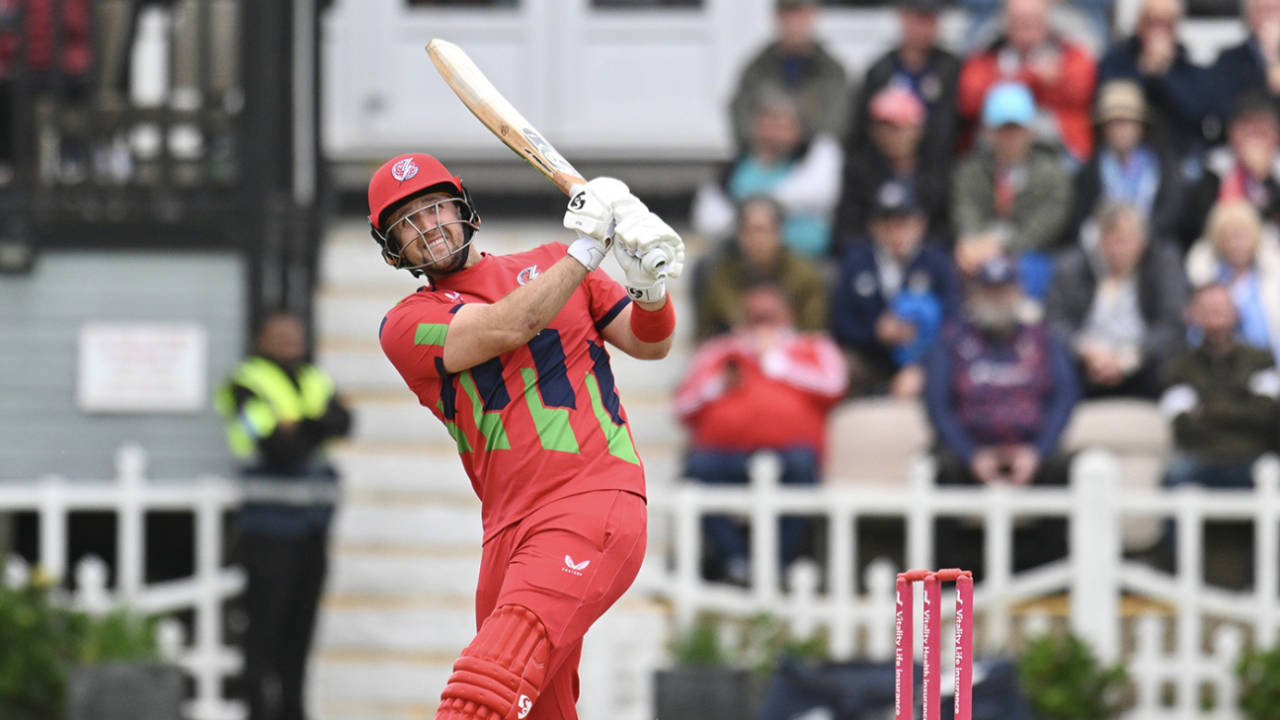
Liam Livingstone 85* from 31 eases Lancashire home in 10-over chase
A Tactical Masterclass in Rain-Affected Conditions
The Vitality Blast tournament often produces unpredictable drama, but few matches deliver the sheer intensity of a rain-shortened encounter. In a contest where every delivery carried immense weight, Liam Livingstone 85* from 31 eases Lancashire home in 10-over chase, breaking a three-game losing streak for the Lightning and reminding spectators why he remains one of the most destructive white-ball batters in the world.
Durham Sets a Competitive Target
The match was reduced to 10 overs per side following a lengthy two-hour rain delay, forcing both teams to adopt an aggressive approach from the very first ball. Durham, batting first, managed a formidable 128 for 2. Openers Graham Clark and Alex Lees were instrumental, combining for quick-fire totals of 49 not out and 42 respectively. Their partnership set the tone early, with Lees taking boundaries off the spin of Tom Hartley in the opening over. Despite the tactical use of ‘pace-off’ bowling from Lancashire—a continuation of the strategy seen in previous matches on this pitch—Durham navigated the powerplay effectively, accumulating 33 runs in the first three overs.
England international Luke Wood provided a moment of quality for Lancashire, finishing with economical figures of 1 for 16 from his two overs. However, Durham continued to pile on the pressure until Livingstone, doubling as a spin option, eventually claimed the wicket of Lees in the eighth over, ending a promising 94-run stand.
Livingstone’s Heroics: A Chase for the Ages
Chasing a target of 129 in just 60 legal deliveries is a monumental task that requires a blend of calculated aggression and pure power-hitting. Lancashire faced an early setback when Keaton Jennings departed early to Callum Parkinson. However, this only brought Liam Livingstone to the crease earlier than expected, setting the stage for one of the most explosive innings of the season.
Livingstone did not waste a moment. He began by pulling Matthew Potts for a massive six, signaling his intent immediately. By the third over, Lancashire had reached 40 for 1, with Livingstone punishing Parkinson’s left-arm spin with three consecutive boundaries. His performance was a continuation of his fine recent form, having scored 44 and 81 in his previous two outings.
The Turning Point
As the game entered its final stages, the pressure began to mount. Livingstone received a lifeline when he was dropped in the deep on 36. He capitalized on this opportunity ruthlessly. Partnered with Michael Jones, who contributed a valuable 27 off 16 balls, Livingstone began to dismantle the Durham bowling attack. The climax of his innings occurred in the eighth over when he took Kasey Aldridge to the cleaners, hitting four successive sixes to effectively kill off the contest.
By the time the final runs were scored, Livingstone had reached a 23-ball fifty and finished unbeaten on 85 from just 31 deliveries, an innings decorated with eight sixes. This effort not only secured a seven-wicket victory with five balls to spare but also saw him surpass Steven Croft’s record for the most sixes by a Lancashire batter in T20 history, cementing his place in the club’s folklore.
Implications for the North Group
While Lancashire remains at the bottom of the North Group, this victory is a significant psychological boost. Both teams now sit on eight points, keeping the race for the quarter-final spots wide open. For Durham, this fourth defeat in six games highlights the volatility of T20 cricket, especially in rain-affected games where a single explosive innings can change the entire complexion of the table. Lancashire will look to build on this momentum, knowing that with a player of Livingstone’s caliber in such devastating touch, no target is out of reach.