Auqib Nabi vs Gurnoor Brar: Decoding The Debate Of The Decade – Auqib Nabi vs Gurnoor Brar: Decoding the BCCI Selection Debate
The Selection Conundrum
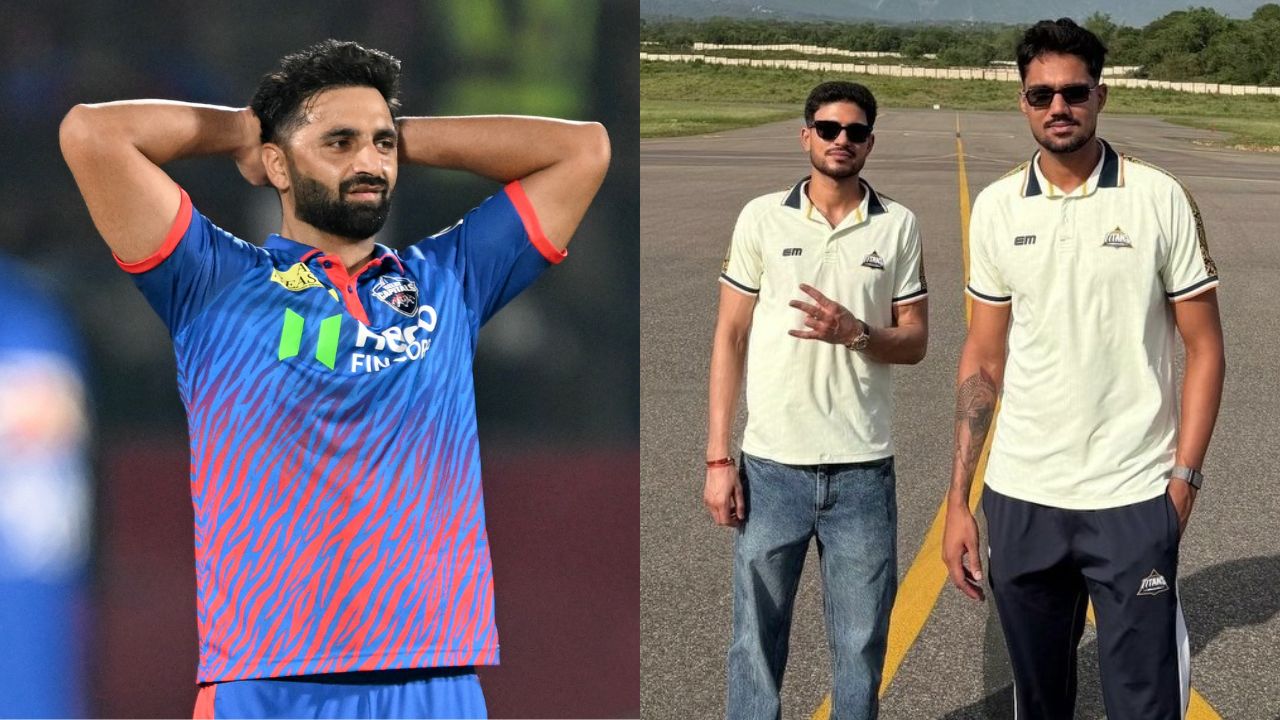
As the Indian cricket team prepares for the upcoming one-off Test against Afghanistan at the Maharaja Yadavindra Singh International Stadium in Mullanpur, the selection panel has once again found itself at the center of a heated public debate. With the announcement of the squad, the omission of Auqib Nabi—a player who has dominated the domestic circuit for two consecutive seasons—in favor of Gurnoor Brar has become the most discussed topic in Indian cricket circles.
Auqib Nabi: The Unlucky Omission
To understand the depth of the frustration among fans, one must look at the numbers. Auqib Nabi has been a force of nature in the Ranji Trophy, claiming a staggering 104 wickets across the 2024-25 and 2025-26 seasons. Often referred to as the ‘Baramulla Express,’ Nabi is a master of swing, seam, and relentless accuracy. Despite securing a massive INR 8.4 Cr contract with the Delhi Capitals for the 2026 IPL season, a national red-ball call-up has remained elusive.
Why Gurnoor Brar?
While Nabi’s domestic record is undeniable, the selectors have pivoted towards a different profile. Here are the key factors that arguably tilted the scales in favor of Gurnoor Brar.
1. The Need for Raw Pace
The modern era of Test cricket, particularly with an eye on the 2027 ODI World Cup in South Africa, demands high velocity. Gurnoor Brar consistently clocks speeds in the 140+ km/h range, putting him significantly ahead of Nabi’s 125-130 km/h operating speed. Chief selector Ajit Agarkar noted that the management is looking for prospects who can be groomed for challenging international conditions, where raw pace remains a non-negotiable asset.
2. Physicality and Bounce
Standing at an imposing 6 feet 5 inches, Brar provides a tactical dimension that is difficult to ignore. His ability to hit the deck hard and generate steep, unsettling bounce is a weapon that selectors feel is vital for future overseas assignments. While Nabi relies on finesse and movement—which are effective on traditional surfaces—Brar’s physical build allows him to extract life from unresponsive pitches, a trait that the current team management highly values.
3. The Leadership Factor
It is no secret that Gurnoor Brar has the strong backing of Test captain Shubman Gill. Having worked closely with the Punjab seamer under the mentorship of Ashish Nehra at the Gujarat Titans, Gill is intimately familiar with Brar’s work ethic and temperament. When a captain and a coach of Nehra’s pedigree identify a player as a long-term prospect, it inevitably carries weight in the selection room.
The Road Ahead
Brar’s path to the national team has been defined by a commitment to the ‘India A’ setup and a consistent display of grit in overseas tour matches. While his economy rate has occasionally been on the higher side, his ability to take wickets in high-pressure environments has clearly impressed the board. For Auqib Nabi, the wait continues. Despite his undeniable talent and domestic dominance, he finds himself in a transitional phase for Indian cricket where the appetite for youth, height, and raw pace currently outweighs traditional swing-bowling accuracy.
Ultimately, the decision to draft Gurnoor Brar is a strategic bet on future potential. While the statistical case for Nabi is strong, the selectors are clearly looking at the bigger picture—a transition phase that prioritizes building a squad capable of succeeding in the fast-paced, high-bouncing conditions of the 2027 World Cup. Only time will tell if this bold move will pay off for the Men in Blue.