Hardik Pandya Reflects on MI’s Defeat Against KKR: Key Misses and Pitch Challenges
A Tactical Breakdown of the Mumbai Indians’ Setback
The Mumbai Indians’ recent outing at Eden Gardens against the Kolkata Knight Riders served as a stark reminder of how quickly momentum can shift in the Indian Premier League. Facing a tricky surface that demanded patience and precision, the Mumbai outfit struggled to find their rhythm, ultimately succumbing to a defeat that left captain Hardik Pandya reflecting on what might have been. With a total of 147 proving insufficient, the match highlighted the fragile nature of middle-order stability and the high cost of fielding lapses.
The Powerplay Collapse and Middle-Order Struggles
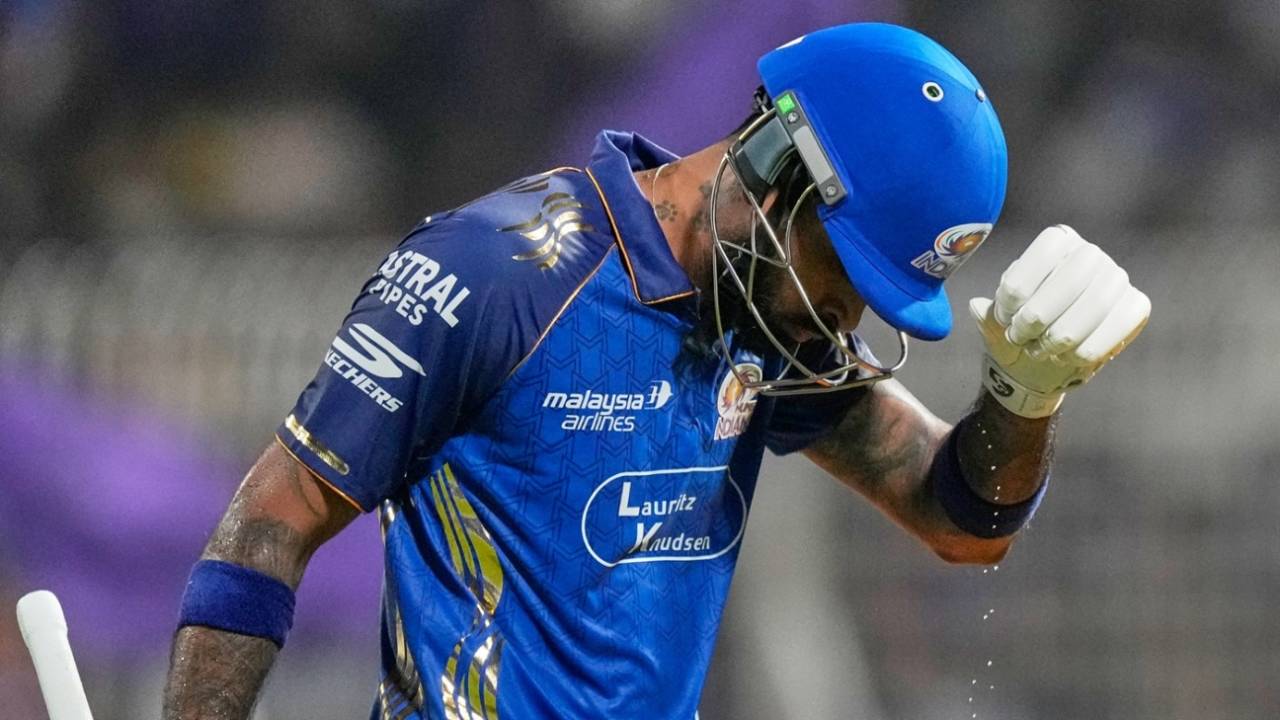
The foundation of Mumbai’s innings was compromised early, with the team finding themselves at a precarious 46 for 4 by the end of the powerplay. This early damage forced a defensive approach that, unfortunately, failed to yield the necessary acceleration. Hardik Pandya and Tilak Varma, tasked with rebuilding the innings, found it difficult to rotate the strike or find the boundary consistently. Their partnership, while vital in avoiding a complete collapse, lacked the explosive impact required for a competitive total.
Statistically, the duo faced significant resistance from the pitch. Hardik’s 26 off 27 balls and Tilak’s 20 off 32 balls culminated in one of the lowest strike rates for the No. 5 and No. 6 positions in an IPL innings where both batters faced at least 20 deliveries. Pandya acknowledged the shortfall, stating, “We were 20 short. I think we lost a lot of wickets in the powerplay, but if Tilak or I would have stayed longer and if we would have stitched a couple of more partnerships… I think we would have had a decent chance.”
A Challenging Surface at Eden Gardens
The conditions in Kolkata were a departure from the high-scoring encounters often associated with the modern IPL. Described by KKR’s Rovman Powell as a “typical Caribbean wicket,” the pitch played host to a contest where the ball held up, rewarding bowlers who possessed variety and control. Across the match, only 295 runs were scored, and 14 wickets tumbled within 38.5 overs.
Interestingly, Hardik Pandya expressed a positive outlook regarding the pitch conditions. He noted that the prevailing trend of batting-dominant IPL matches often leaves bowlers feeling sidelined. “I don’t mind playing on this sort of wicket, where bowlers have something to do. I think today’s game gave bowlers a lot of something from the wicket, which makes them come and bowl some good balls… So, yeah, I kind of enjoyed it,” the captain added.
Fielding Lapses: The Deciding Factor
Despite the modest total, Mumbai Indians remained firmly in the contest when KKR found themselves at 73 for 3 after nine overs. However, the game slipped away due to missed opportunities in the field. Two crucial dropped catches allowed the pair of Rovman Powell and Manish Pandey to build a match-winning 64-run partnership, effectively sealing the game for the hosts.
Pandya did not shy away from addressing the team’s ongoing defensive struggles. “I don’t know what went wrong with the fielding. I think, throughout the season, we’ve been quite poor in fielding. We have dropped a lot of catches, which obviously no one wants to do, but in that part of the game, I think there is no hiding away,” he admitted.
The captain emphasized that in a tight league, small margins define success. “If you get chances, if you want to win games, you need to grab all the chances, even half-chances as well. But yeah, when you drop chances which can change the game, it’s always you’re chasing the game.”
Looking Forward
As the Mumbai Indians look to rebound, the lessons from the Eden Gardens encounter are clear. Strengthening the middle-order strike rotation and addressing the recurring fielding inconsistencies are paramount. While the pitch offered a unique challenge, the ability to adapt to such conditions—rather than being stifled by them—remains the hallmark of a champion side. For Pandya and his men, the focus now shifts to executing under pressure, ensuring that when the next opportunity arises, they are prepared to grab it with both hands.