Najmul Hossain Shanto Credits Healthy Bowling Competition for Historic Series Win
A New Era for Bangladesh Test Cricket
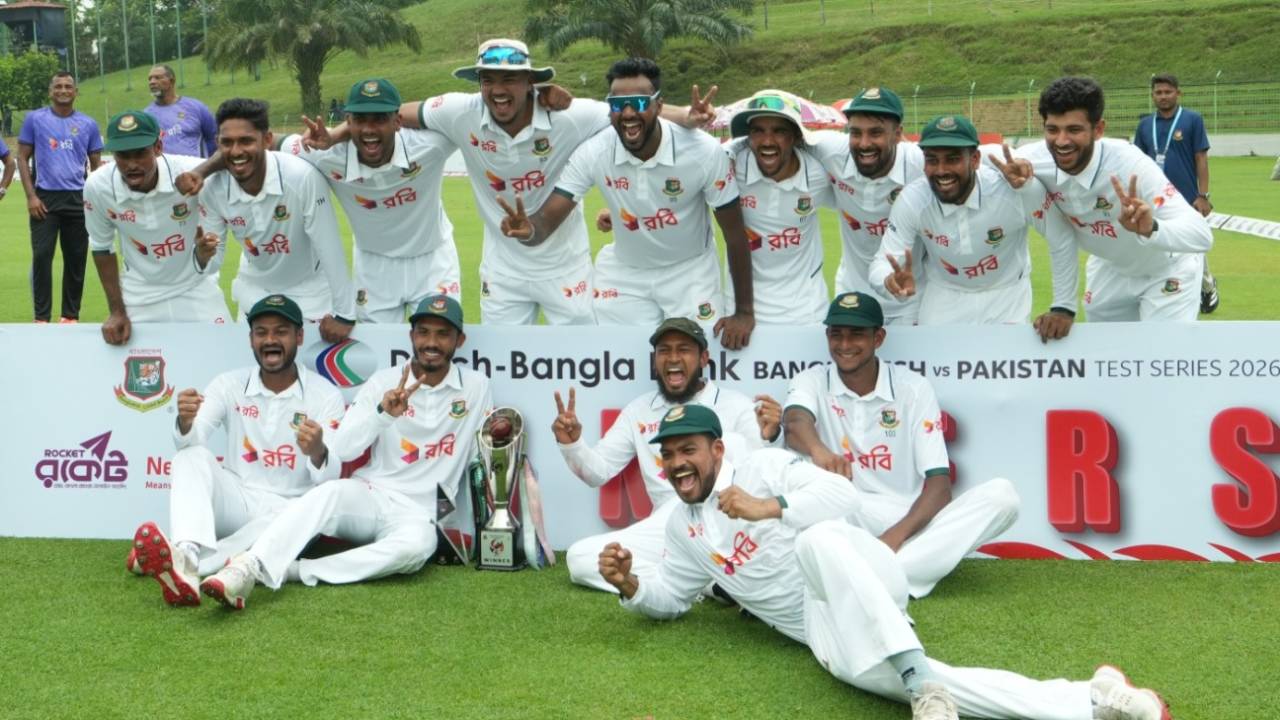
Bangladesh’s recent 2-0 Test series victory over Pakistan stands as a watershed moment in the nation’s cricketing history. Central to this success, according to captain Najmul Hossain Shanto, was not just individual brilliance, but a culture of ‘healthy competition’ that permeated the entire bowling unit. By fostering an environment where every bowler feels responsible for the team’s success, Bangladesh managed to dismantle the Pakistani lineup with a blend of spin dominance and fiery pace.
The Bowling Unit: A Dual-Threat Strategy
The numbers from the series tell a story of a well-rounded attack. Bangladesh’s spin contingent proved particularly lethal, accounting for 22 wickets across the two Tests. Taijul Islam emerged as the hero of the second Test, claiming six wickets in the fourth innings to secure a 78-run victory. His performance, coupled with vital contributions from Mehidy Hasan Miraz, ensured that the Pakistani batsmen were constantly under pressure.
However, it was the pace attack that provided the necessary sting, contributing 18 wickets to the series tally. Nahid Rana stood out with an impressive haul of 11 wickets, including a memorable 5 for 40 in Dhaka. Shanto emphasized that this balanced attack allowed him the luxury of setting aggressive fields and dictating the pace of play.
The Power of Healthy Competition
‘I think it is this healthy competition that won us the Test series,’ Shanto remarked. ‘Whoever is given the responsibility of bowling, they have stepped up. It is also desirable to see a bowler cutting out the runs or taking wickets when the team is under pressure.’ This mentality has created a sense of accountability, where players are not just fighting for a spot, but contributing to a shared goal of team dominance.
Handling the Pressure: Maturity and Leadership
Test cricket is often decided in the margins, and the final morning of the second Test was no exception. When Mohammad Rizwan and Sajid Khan began to build a partnership, the pressure on the Bangladeshi fielders was palpable. Shanto admitted that the team felt the nerves, but noted a significant improvement in the side’s ability to remain composed.
The captain credited the senior players—Mushfiqur Rahim, Litton Das, Miraz, and Mominul Haque—for their guidance during crunch moments. ‘I think I am very lucky that Mushfiq bhai is in the field. It is often difficult to take decisions in these crunch moments, so if you get such help from those around you, it is definitely a bonus,’ Shanto said. This collaborative leadership approach has clearly helped the team transition from a side that panics to one that executes under duress.
Litton Das and the Art of Resilience
No discussion of this series would be complete without acknowledging Litton Das’s masterful century in the first innings. With the team in dire straits at 116 for six, Litton’s innings served as a ‘textbook example’ of playing for the team. His ability to shepherd the tailenders, particularly Taijul Islam, and his communication regarding his approach, allowed Bangladesh to post a competitive total that kept them in the game.
Looking Ahead: A Blueprint for Success
Shanto is keen to ensure that this victory serves as a foundation for future performances rather than an isolated peak. He highlighted the ‘work ethic’ of the entire squad, including the red-ball specialists and the support staff, as the true engine behind the results. While acknowledging that there are still areas for ‘fine-tuning,’ Shanto is proud of the dominant fashion in which the team navigated the series.
By embracing a more vocal and confident identity, Bangladesh has shown that they are no longer content with merely competing. Whether it was the heated exchanges on the field or the tactical brilliance in the dressing room, this series demonstrated a team that has finally found its rhythm in the longest format of the game. For Shanto and his men, the goal now is to maintain this momentum and continue the growth of the team’s Test cricket identity.