Yashasvi Jaiswal ODI Snub: Fans Outraged Over Selection Decision
A Shocking Omission in the Indian Setup
The announcement of the Indian ODI and Test squads for the upcoming bilateral series against Afghanistan has sent shockwaves through the cricketing fraternity. While the return of senior stalwarts is always a point of discussion, the notable absence of Yashasvi Jaiswal from the One Day International setup has drawn sharp criticism from fans and pundits alike. Jaiswal, widely considered a generational talent and the natural successor to the opening mantle, finds himself on the sidelines despite having proven his mettle in the 50-over format.

For the past few years, Jaiswal has been a fixture in the Indian developmental circuit, waiting for his chance to cement a permanent spot. With Rohit Sharma and Shubman Gill currently occupying the top order, the third-opener slot was his to lose. His recent form, highlighted by a match-winning maiden ODI century, suggested he had finally hit his stride, making this sudden exclusion even more difficult for supporters to comprehend.
Tracing Jaiswal’s ODI Journey
Jaiswal’s entry into the ODI arena was not immediate. After making his mark in the Test and T20I formats in 2023, his wait for an ODI cap stretched into early 2025. His debut in Nagpur against England was brief, and his subsequent rotation—often making way for returning seniors like Virat Kohli—highlighted the volatility of his position in the hierarchy.
The real turning point was supposed to be the series against South Africa in late 2025. With Shubman Gill ruled out due to a neck injury, Jaiswal stepped into the breach. His progression through that series was stellar: starting with modest scores of 18 and 22, he eventually produced a masterful 116 not out in the decider. That innings was widely viewed as his ‘arrival’ moment in ODI cricket, cementing his status as a reliable, high-ceiling opener.
The Multi-Dimensional Dilemma
Why, then, was he dropped? The prevailing theory points toward the Indian management’s growing obsession with multi-dimensional players. Over the last 18 months, there has been a clear shift in selection philosophy, prioritizing players who offer more than one skill set. Whether it is an extra bowling option or, in the case of Ishan Kishan, a secondary wicketkeeping ability, the team balance is being heavily influenced by versatility.
Ishan Kishan’s inclusion in the squad for the Afghanistan series over Jaiswal appears to be a direct result of this strategy. By selecting Kishan, the management gains a wicketkeeping backup, allowing the team to accommodate utility players like Nitish Reddy in the middle order. While this strategy provides tactical flexibility, it comes at the cost of excluding a specialist batsman who has arguably done enough to earn a permanent spot.
Fan Backlash and the Path Ahead
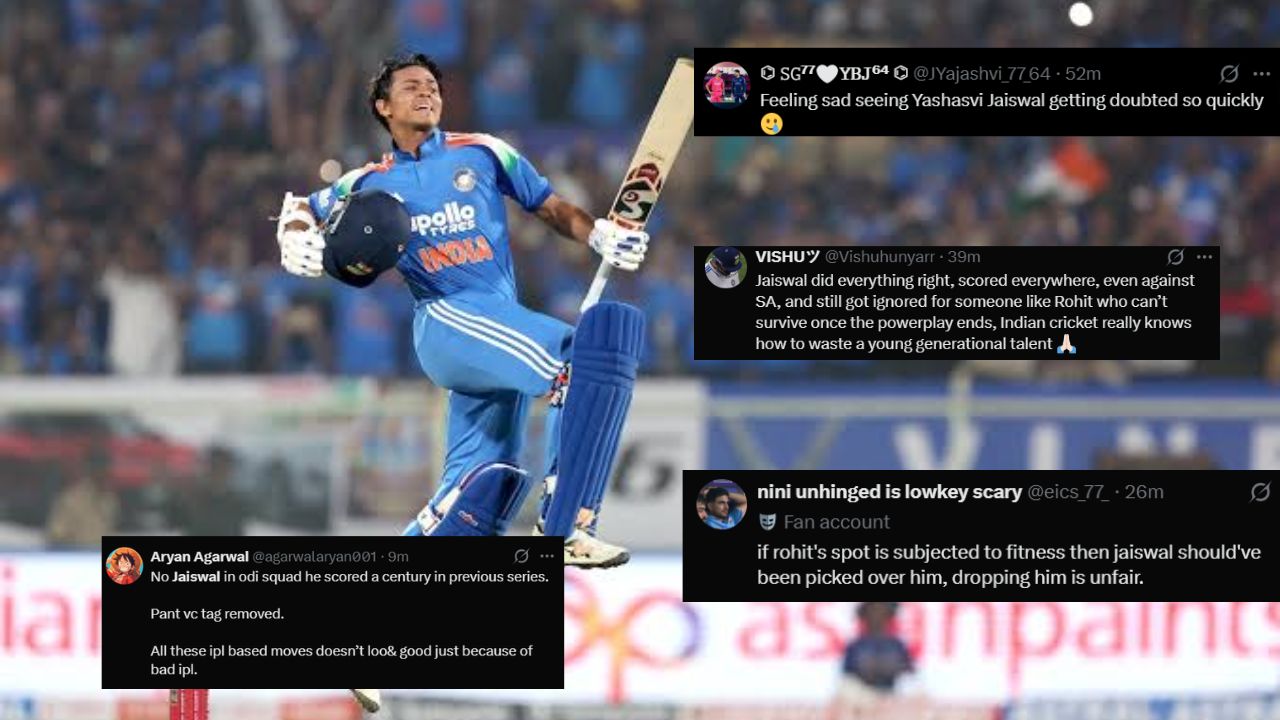
The reaction on social media has been swift and unforgiving. Fans have taken to the internet to label the decision as a waste of a generational talent. The sentiment is clear: in an era where Rohit Sharma’s fitness is managed carefully, having a specialist opener like Jaiswal waiting in the wings should be a priority, not an afterthought.
The upcoming series against Afghanistan, which includes a solitary Test from June 6 to 10 followed by three ODIs starting June 14, will be a litmus test for the new squad configuration. The full squad list is as follows:
- Shubman Gill (C)
- Rohit Sharma
- Virat Kohli
- Shreyas Iyer (VC)
- KL Rahul
- Ishan Kishan
- Hardik Pandya
- Nitish Kumar Reddy
- Washington Sundar
- Kuldeep Yadav
- Arshdeep Singh
- Prasidh Krishna
- Prince Yadav
- Gurnoor Brar
- Harsh Dubey
As the team prepares for the upcoming ICC Champions Trophy, the pressure is on the selectors to justify these frequent changes. While the team management insists that their decisions are based on tactical requirements, the exclusion of a player of Jaiswal’s caliber remains a glaring point of contention that will likely continue to spark debate throughout the series.