Kathryn Bryce’s all-round effort takes Scotland to tri-series win with dominant performance
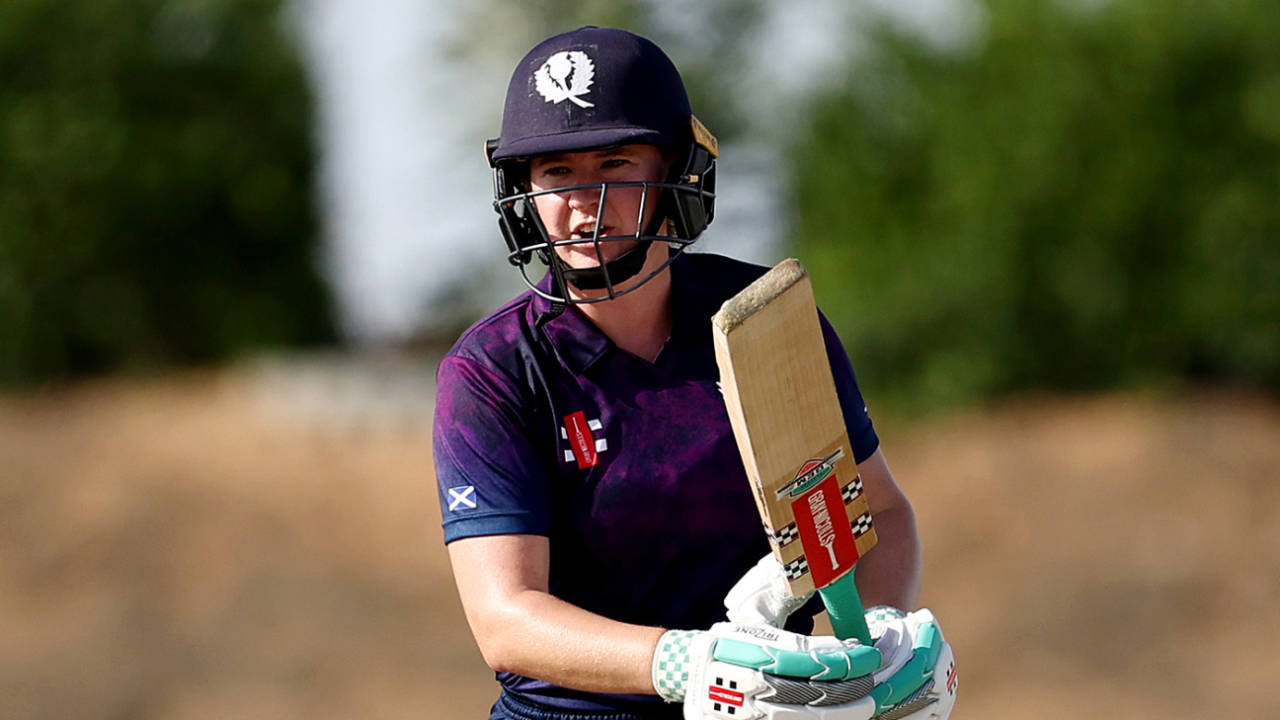
In a compelling display of leadership and individual brilliance, Captain Kathryn Bryce’s all-round effort proved decisive as Scotland triumphed over the Netherlands in a rain-curtailed fixture in Edinburgh. This crucial victory not only sealed Scotland’s dominance in the tri-series but also underscored their emerging strength in the women’s international cricket arena. Finishing as table-toppers with an impressive three wins from four matches, Scotland demonstrated their consistency and ability to perform under pressure, leaving one match between Bangladesh and Netherlands to complete the series.
Rain Interrupts, Netherlands Opts to Bowl
The highly anticipated contest commenced after a considerable delay caused by persistent rain, a common challenge in Scottish cricketing summers. Upon the eventual start, Netherlands captain Babette de Leede made the strategic decision to bowl first, hoping to exploit any moisture in the pitch and put Scotland under early pressure. However, the Scottish batting line-up, led by their prolific captain, was prepared for the challenge.
The early exchanges proved tricky for Scotland. Opener Darcey Carter fell victim to Heather Siegers in just the second over, a crucial early breakthrough for the Dutch side. This brought Katherine Fraser to the crease to join Captain Kathryn Bryce, and the duo immediately set about rebuilding the innings with intent. Their partnership blossomed into a rapid 43-run stand off a mere 24 balls, punctuated by a flurry of boundaries that significantly lifted Scotland’s scoring rate and shifted the momentum firmly back in their favour. Their aggressive approach showcased their determination to overcome the early setback and post a competitive total.
Bryce Sisters Combine for Crucial Partnership
The flourishing second-wicket stand was eventually broken in the sixth over by Caroline de Lange, who managed to dismiss Katherine Fraser. However, the arrival of Sarah Bryce at the crease meant there was no let-up in Scotland’s attacking momentum. Sarah, known for her dynamic stroke play, seamlessly integrated into the innings, forming a formidable partnership with her sister, Kathryn. Together, they forged a vital 58-run stand that propelled Scotland past the 100-run mark, setting a strong foundation for a challenging total.
Kathryn Bryce’s innings was a masterclass in controlled aggression and astute shot selection. She departed after a magnificent 63 runs from just 33 balls, an innings adorned with powerful strokes and intelligent placement that demonstrated her class and ability to dominate proceedings. Her dismissal came with Scotland having posted a formidable target of 125 runs in their rain-reduced 12 overs, a score that felt significantly higher given the abbreviated nature of the game and the challenging conditions.
Netherlands’ Chase Under DLS Pressure
Facing a DLS-adjusted target of 105 runs from 10 overs, the Netherlands knew they needed a swift and aggressive start. However, they were immediately put on the back foot by the very player who had dominated with the bat. Kathryn Bryce, exhibiting her all-round capabilities, broke the opening stand in the second over by claiming the crucial wicket of Phebe Molkenboer. This early blow was compounded in the very next over when Olivia Bell dismissed Heather Siegers, leaving the Dutch chase in a precarious position with two key wickets down early.
Despite the early setbacks, Sterre Kalis and captain Babette de Leede showed commendable resilience. They embarked on a crucial 42-run partnership, attempting to stabilize the innings and bring their team back into contention. Their collaboration involved careful singles and well-timed boundaries, trying to keep pace with the escalating required run rate. However, the pressure continued to mount as the overs ticked by, and Scotland’s bowlers maintained a tight line and length.
The turning point in the chase came when Chloe Abel broke the stubborn partnership, dismissing one of the set batters. This wicket proved to be a significant psychological blow, leaving the Netherlands needing an improbable 34 runs from just 12 balls. The task became increasingly daunting with each dot ball and every tight over from the Scottish attack. The disciplined bowling performance, coupled with sharp fielding, ensured that the Dutch batters struggled to find the boundaries required to stay in the game.
Ultimately, despite their best efforts, the Netherlands could only muster 80 runs from their allotted 10 overs, falling short by a considerable margin. Scotland’s bowlers maintained their composure, executing their plans meticulously and denying the opposition any clear-cut opportunities to accelerate. The victory by 24 runs (DLS method) was a testament to Scotland’s collective effort, but undoubtedly, Kathryn Bryce’s stellar performance stood out as the defining factor.
A Tri-Series Triumph for Scotland
This tri-series victory is a significant milestone for Scottish women’s cricket. It highlights the progress the team has made and the talent pool that is emerging within the country. To win a multi-nation tournament, especially one featuring competitive teams like Bangladesh and the Netherlands, speaks volumes about their current form and future potential. The seamless integration of experienced players with emerging talents, all galvanized under Kathryn Bryce’s leadership, bodes well for their upcoming international assignments.
Kathryn Bryce’s all-round effort was truly the cornerstone of Scotland’s success in this particular match and throughout the tri-series. Her ability to contribute significantly with both bat and ball, often at critical junctures, exemplifies the qualities of a world-class all-rounder and a dynamic captain. This win will undoubtedly boost the team’s confidence and inspire a new generation of cricketers in Scotland, further cementing their place on the international stage.