Irfan Pathan Thrashed For ‘Fatherly’ Defending Vaibhav Sooryavanshi – Irfan Pathan Faces Backlash Over Vaibhav Sooryavanshi Bodyline Debate
The Controversial Tactical Battle in IPL 2026
In the high-stakes environment of the IPL 2026 Qualifier 2, 15-year-old Rajasthan Royals sensation Vaibhav Sooryavanshi delivered a performance for the ages, smashing 96 runs off just 47 balls. However, his historic innings was marred by a heated tactical debate. As the young opener faced a relentless stream of short-pitched, body-directed deliveries from Gujarat Titans’ pace spearheads Kagiso Rabada and Mohammed Siraj, the cricket world found itself divided over the ethics of utilizing such aggressive tactics against a minor.
Understanding the ‘Bodyline’ Tactic
The term ‘Bodyline’—or fast leg theory—has long been a polarizing subject in cricket. Historically, it was a strategy employed by England during the 1932–33 Ashes series specifically to neutralize the brilliance of Sir Don Bradman. By pitching the ball short on or just outside the leg stump, bowlers force the batter into a precarious position where they must either risk injury from a blow to the body or head, or play a risky shot that often results in a catch.
In the context of the Rajasthan Royals vs. Gujarat Titans clash, this was precisely the blueprint. Rabada and Siraj consistently targeted Sooryavanshi’s rib cage and helmet, aiming to intimidate the youngster rather than simply out-bowling him. While the tactic is technically within the laws of the game, its application against a 15-year-old sparked a national conversation about the spirit of the sport.
Irfan Pathan’s Defense and the Resulting Backlash
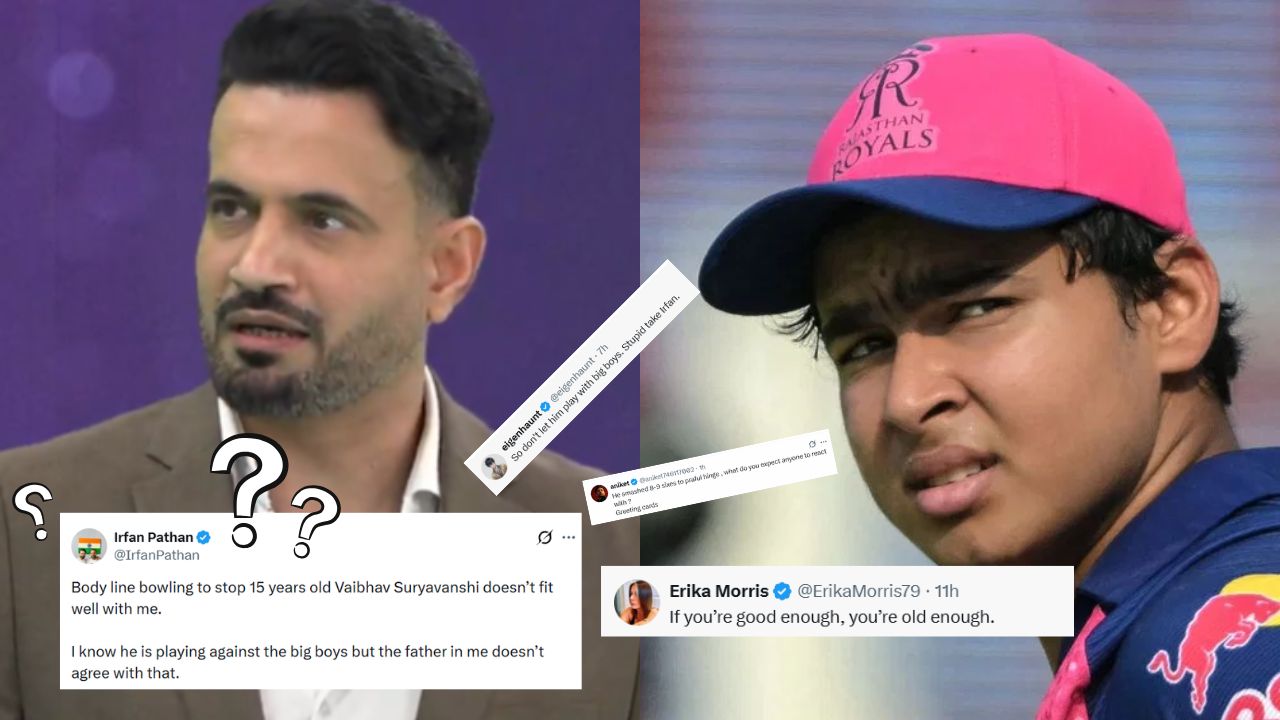
Former Indian all-rounder Irfan Pathan was quick to express his discomfort with the proceedings. Taking to social media, Pathan stated, ‘Body line bowling to stop 15 years old Vaibhav Suryavanshi doesn’t fit well with me. I know he is playing against the big boys but the father in me doesn’t agree with that.’ His comments aimed to highlight the divide between professional competition and the protection of younger players. However, the response from the public was largely negative, with many fans arguing that professional cricket is a meritocracy where age should not dictate a bowler’s strategy. Critics suggested that if a player is deemed fit to perform on the biggest stage of the IPL, they must be prepared to face the same rigors as their senior counterparts.
A Masterclass Amidst the Chaos
Despite the physical intimidation, Sooryavanshi’s performance was arguably the highlight of the Qualifier. His 96-run onslaught included 8 boundaries and 7 towering sixes, showcasing immense hand-eye coordination and composure. After the early loss of established stars like Yashasvi Jaiswal and Dhruv Jurel, Sooryavanshi anchored the innings alongside Ravindra Jadeja to help push the Rajasthan Royals to a formidable total of 214 for 6. His departure, a top-edge off a brutal Kagiso Rabada bouncer, brought his remarkable run to an end, just shy of a maiden century.
The Outcome and The Path Ahead
Ultimately, the intensity of the Qualifier 2 match did not stop there. The Gujarat Titans responded with a dominant batting display. Shubman Gill’s magnificent 104 off 53 balls, complemented by Sai Sudharsan’s 58, allowed the Titans to chase down the 215-run target with 7 wickets and 8 balls to spare. This victory not only eliminated the Rajasthan Royals from the tournament but also confirmed the Gujarat Titans’ place in the IPL 2026 Final on May 31. While the match will be remembered for the Gujarat Titans’ record-breaking run chase, the image of a 15-year-old navigating a gauntlet of elite-level pace bowling will remain a significant talking point in the evolution of modern T20 cricket.