“Tremendous injustice”: Sanjay Manjrekar fumes over Auqib Nabi’s snub despite st – Auqib Nabi’s Ranji Trophy Dominance Ignored: Sanjay Manjrekar Blasts “Tremendous Injustice”
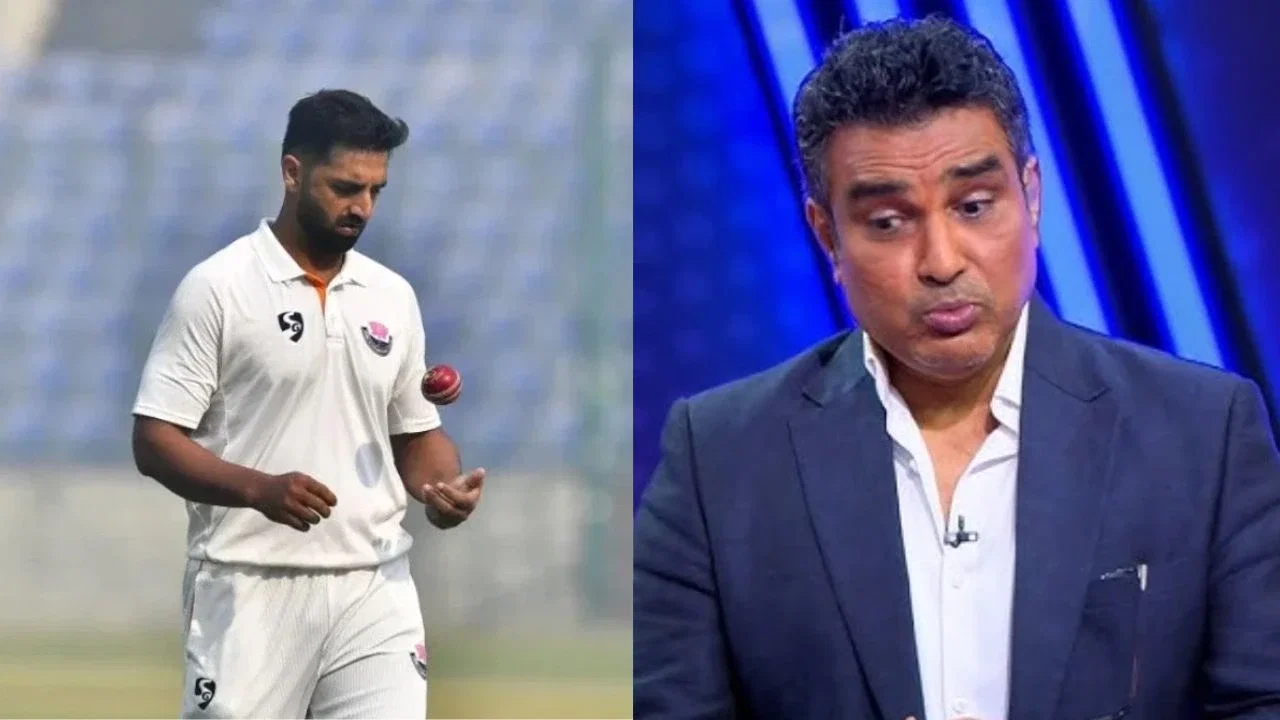
The cricketing world, particularly in India, is currently abuzz with a contentious selection decision that has drawn sharp criticism from former India batter and respected commentator, Sanjay Manjrekar. The veteran cricketer has openly expressed his disbelief and frustration over the omission of Jammu & Kashmir’s prolific pacer, Auqib Nabi, from the Indian squad slated to face Afghanistan in a one-off Test match. Manjrekar unequivocally labeled the snub as “ridiculous” and a “tremendous injustice,” sparking a significant debate about the sanctity of domestic performances in the national selection process.
Auqib Nabi’s Unprecedented Dominance in Ranji Trophy
Auqib Nabi’s exclusion is particularly perplexing given his phenomenal run in the Ranji Trophy, India’s premier first-class domestic tournament. In the latest edition of the Ranji Trophy, Nabi emerged as the undisputed highest wicket-taker, a remarkable feat that played a crucial role in Jammu & Kashmir securing their maiden title. His consistent ability to dismantle opposition batting line-ups showcased not only his skill but also his unwavering dedication to red-ball cricket.
Delving deeper into his statistics, Nabi’s performance over the last two Ranji Trophy seasons paints a picture of unparalleled dominance. Across these two editions, he has amassed a staggering total of over 100 wickets. This level of sustained excellence in first-class cricket traditionally serves as a direct pathway to higher honors, including call-ups to India A squads, if not the senior national team itself. Yet, despite his consistent wicket-taking prowess, Nabi has regrettably found himself on the sidelines, consistently overlooked even for developmental squads.
His record in the Ranji Trophy won by Jammu & Kashmir is truly exceptional: 60 wickets in just 10 matches at an outstanding bowling average of 12.56. This incredible haul included 7 five-wicket hauls, demonstrating his knack for taking wickets in clusters and turning matches. Furthermore, Nabi was one of only two bowlers in the entire tournament to register multiple 10-wicket match hauls, underscoring his match-winning capabilities.
In the preceding edition, when J&K reached the quarterfinals, Nabi was again a standout performer, finishing as the second-highest wicket-taker with 44 wickets in 8 matches at an average of 13.93. Combining these two seasons, Auqib Nabi Dar has taken a formidable 104 wickets in 18 matches at an astounding bowling average of 13.14, complemented by 13 five-wicket hauls. These figures are not just impressive; they are a clear testament to a bowler who has consistently outperformed his peers in the purest format of the game.
The India Squad Announcement and Other Key Changes
The Board of Control for Cricket in India (BCCI) recently unveiled India’s squad for the one-off Test against Afghanistan, scheduled to commence on June 6 at the Maharaja Yadavindra Singh International Cricket Stadium in Mullanpur, New Chandigarh. This ground is relatively new to the international circuit, with this match marking only the second Men’s International fixture to be hosted there. Previously, it staged a T20I between India and South Africa in December 2025 and two Women’s ODIs between India and Australia in September of the same year.
While Nabi’s striking omission became a major talking point, the squad announcement also featured other significant developments. A notable change was the decision to relieve wicketkeeper-batter Rishabh Pant of his vice-captaincy duties, which were subsequently handed over to KL Rahul. Additionally, key senior players Ravindra Jadeja and Mohammed Shami were rested from the Test squad, citing workload management and injury concerns. This context, particularly the absence of an experienced pace spearhead like Shami, makes Nabi’s non-selection even more bewildering to many observers.
The squad did, however, see some fresh faces earning their maiden call-ups to the national team. Left-arm spinners Manav Suthar and Harsh Dubey were included, alongside pacer Gurnoor Brar. While these selections offer opportunities for emerging talents, they simultaneously highlight the perceived oversight of Auqib Nabi, whose red-ball credentials arguably surpass those of some new entrants based purely on recent domestic form.
Sanjay Manjrekar’s Strong Condemnation: “Tremendous Disrespect”
Sanjay Manjrekar, during his appearance on Sportstar’s Insight Edge podcast, did not mince words when discussing Auqib Nabi’s non-selection. He articulated his profound disappointment, calling the decision a “tremendous disrespect” not only to Nabi as an individual but also to the fundamental principle and spirit of the Ranji Trophy itself. Manjrekar’s comments underscored a deeper concern about the value placed on performances in India’s most prestigious domestic tournament.
Reflecting on past eras, Manjrekar lamented the shift in public response to perceived injustices. “I used to like the olden days when tremendous injustice was done. People would come out on the streets with placards and protests,” he remarked, drawing a contrast with the modern era where “the outcry is mostly on social media.” Despite this change in the mode of protest, Manjrekar asserted the gravity of the situation: “this is one non-selection that I just can’t understand.”
The former batter further emphasized the inexplicable nature of Nabi’s snub, particularly in light of Mohammed Shami’s absence from the squad. His argument was direct and pointed: “It’s actually ridiculous. When Mohammed Shami and Mohammed Siraj are not playing, whether because they are being rested or for long-term planning, then you might as well not have the Ranji Trophy if performances like these are going to be ignored.” This strong statement reflects a deep-seated belief that exceptional domestic performances, especially in the absence of established stars, should be unequivocally rewarded with national recognition.
The IPL Conundrum: A Possible Explanation?
Amidst the widespread criticism, speculation has emerged regarding a potential reason behind Nabi’s non-selection: his performance in the Indian Premier League (IPL) 2026. This year, Nabi featured in five matches for the Delhi Capitals but failed to take any wickets, conceding runs at an economy rate exceeding 11 runs per over. It has been suggested that this less-than-stellar white-ball outing might have factored into the selectors’ decision-making process for a red-ball assignment.
However, this line of reasoning raises significant questions about the criteria for Test selection. The Ranji Trophy is the traditional proving ground for Test cricketers, demanding different skills, temperament, and endurance compared to the fast-paced, high-scoring nature of T20 cricket. To prioritize, or even heavily weigh, a player’s brief IPL form over two years of exceptional red-ball dominance in the Ranji Trophy could be seen as a flawed approach that devalues sustained first-class excellence. The debate now hinges on whether white-ball statistics are inadvertently overshadowing the critical importance of red-ball performances for Test match aspirations.
Conclusion: The Broader Debate on Domestic Performance Recognition
Auqib Nabi’s exclusion from the Indian Test squad for the Afghanistan series has ignited a crucial conversation within Indian cricket. It highlights the ongoing tension between rewarding consistent domestic performers and considering other factors such as IPL form, perceived ‘potential’, or perhaps even the balance of the squad. Sanjay Manjrekar’s passionate stance resonates with many who believe that the Ranji Trophy, as the bedrock of Indian cricket, must have its top performers duly recognized and rewarded.
If players like Auqib Nabi, who have shown unparalleled dedication and skill in the longest format domestically, continue to be overlooked, it risks demoralizing a generation of cricketers striving for excellence in first-class cricket. The message sent to aspiring Test players should be clear: exceptional Ranji Trophy performances are the most direct route to the national team. The current situation, as articulated by Manjrekar, suggests that this fundamental principle might be at risk of being undermined.