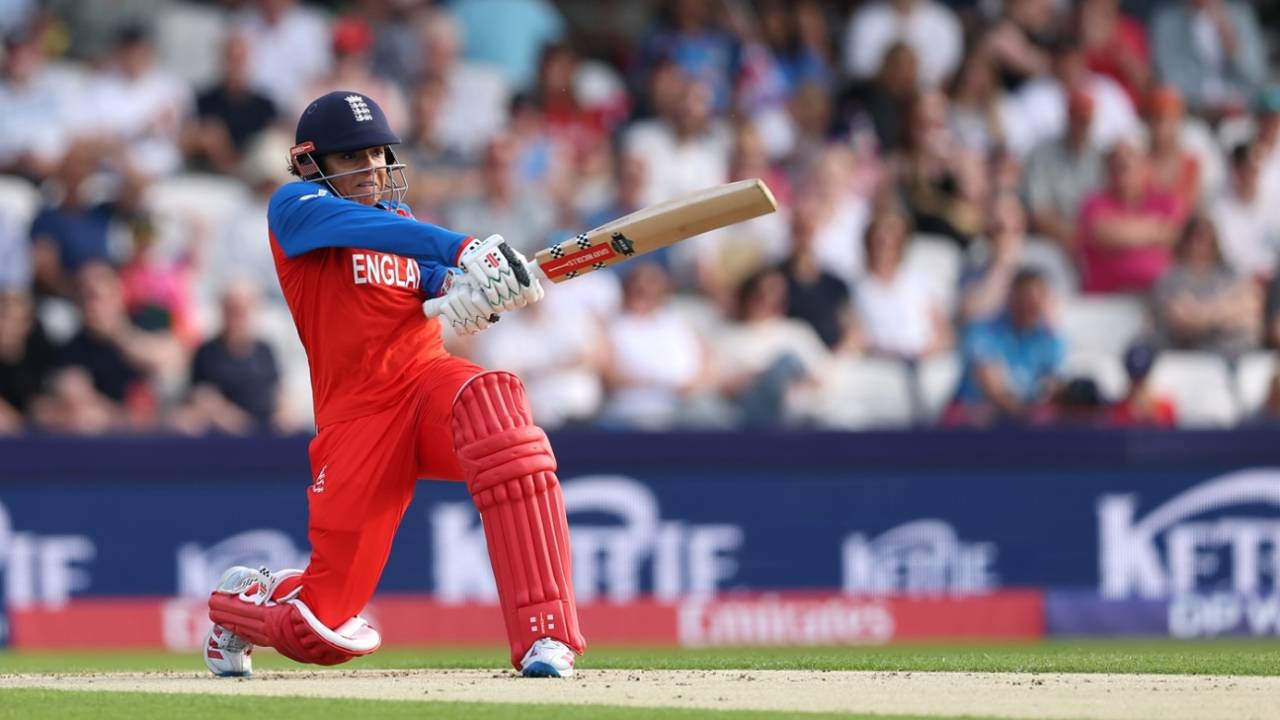
A Commanding Display at Headingley
England continued their clinical march through the Women’s T20 World Cup with a comprehensive 38-run victory over Scotland. The match, which saw England post a formidable total of 200 for 5, was highlighted by a masterclass in batting from the middle order. As the tournament progresses, the depth of the English side remains a focal point for cricket analysts worldwide.
Dunkley’s Triumphant Return
Sophia Dunkley made an emphatic statement upon her return to the starting XI. Filling in at No. 3 due to a calf injury sustained by captain Nat Sciver-Brunt, Dunkley showed no signs of rustiness. She anchored the innings with a brilliant 57 off just 37 balls, providing the technical foundation required to set such a high target. Her ability to rotate the strike while finding the boundary at crucial intervals reminded spectators why she is a vital component of the English white-ball setup.
Late-Order Fireworks
While Dunkley provided the stability, it was the explosive finishing act of Freya Kemp and Dani Gibson that truly demoralized the Scottish attack. With the platform laid, the pair unleashed a boundary blitz that saw them accumulate an unbroken sixth-wicket stand worth 61 runs in a mere 21 balls. Kemp contributed 39 not out, while Gibson chipped in with a vital 30, pushing the score to a daunting 200 runs. This late-order surge is becoming a trademark of the current England side, proving they can capitalize on any momentum shift.
Scotland’s Struggles and Highlights
For Scotland, the evening was a mix of individual brilliance and collective difficulty. Kirstie Gordon, the left-arm spinner who previously represented England, proved her mettle by claiming a wicket with her very first delivery. She finished with respectable figures of 2 for 30, consistently asking questions of the English batters. However, the fielding unit struggled to maintain the high standards they displayed in their narrow defeat to the West Indies earlier in the week. A series of unforced errors allowed England to keep the scoreboard ticking at an accelerated rate.
The Chase and Bowling Dominance
Scotland faced a monumental task chasing 201 for victory. They began the pursuit with intent, matching England’s intensity during the powerplay phase. Sarah Bryce led the charge with a gritty 34, attempting to keep the required run rate within reach. Yet, the pressure applied by the English bowling attack proved too great to overcome. Sophie Ecclestone, ever the danger, claimed two crucial wickets in the space of nine balls, effectively stifling any momentum Scotland had gathered. Her spell of 2 for 23 was instrumental in keeping the opposition at bay.
Tournament Implications
This result secures England’s third win in three outings, cementing their place as one of the favorites to lift the trophy. The ability to win decisively—even when rotating personnel due to injury—highlights the squad’s immense depth and preparation. England’s dominance at Headingley served as a warning to their remaining group stage opponents: this team is firing on all cylinders. As the Women’s T20 World Cup reaches its critical phase, England’s blend of tactical acumen and raw power makes them a side that every other team will be eager to avoid in the knockout stages.
The victory serves as a testament to the coaching staff’s philosophy of aggression and calculated risk-taking. With the batting order performing in harmony and the bowling attack maintaining discipline under pressure, England remains the team to beat in this edition of the tournament.