T20 World Cup: Ecclestone: ‘Dean a great captain, everyone feels calm under her’ as England Face Scotland
England Navigates Captaincy Change in T20 World Cup Challenge
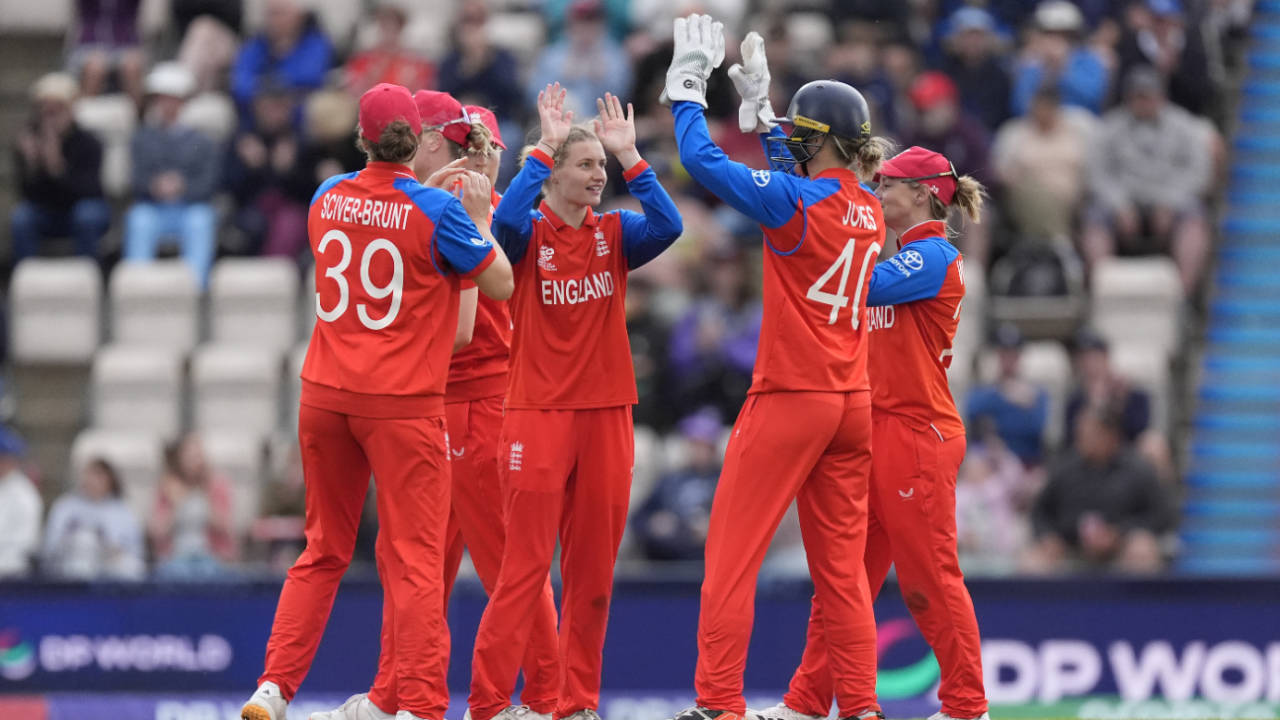
England finds itself in a familiar yet manageable predicament ahead of their crucial T20 World Cup encounter against Scotland. Star all-rounder and captain Nat Sciver-Brunt has been ruled out of the next two matches after aggravating a calf muscle injury sustained during the victory over Ireland in Southampton. This setback, however, is not entirely new for the English squad, which has previously demonstrated its depth and resilience in her absence.
Charlie Dean Steps Up as Trusted Leader
Taking the reins for the upcoming clash at Headingley on Saturday night will be Charlie Dean, a role she has embraced with growing confidence and success. Dean’s experience as a stand-in captain is not fresh; she previously led England to 2-1 T20I series victories against both New Zealand and India during Sciver-Brunt’s initial recovery from the same calf injury, which had kept her out of the entire competitive lead-up to the tournament. Her prior stints at the helm ensure that the team approaches this period of transition with a sense of calm and continuity rather than disruption.
Sciver-Brunt had made a strong return, showcasing excellent form in the warm-up game against India and England’s first two T20 World Cup matches. Her current absence, however, will see her miss the fixtures against Scotland and the West Indies, presenting a significant test of England’s collective strength and Dean’s leadership acumen on the global stage.
Ecclestone Praises Dean’s Leadership and Composure
Speaking on the eve of the Scotland game, Sophie Ecclestone, the linchpin of England’s spin attack, provided insights into the team’s morale and the seamless transition of captaincy. Ecclestone confirmed that Sciver-Brunt was in good spirits despite the injury, and crucially, the team felt no significant disruption thanks to Dean’s established presence in the leadership role and the similar captaincy styles between the two players.
“Not ideal that she’s missing the next two games, but Deano’s going to take charge, and it’s obviously a really exciting place to be back in charge and captain at the World Cup,” Ecclestone stated. She emphasized Dean’s prior experience: “Charlie’s obviously captained recently. It’s been really cool to play with her for a bit, and it’s quite nice for her to not come in blindsided now. She’s been captain for a few games of England now, so it’d just be like a duck to water again, I reckon.”
Ecclestone further elaborated on the positive impact of Dean’s leadership, articulating the sentiment shared across the dressing room. “It’s pretty weird not to have Nat in a World Cup game, but Charlie’s been amazing… she’s been such a great captain, everyone feels so calm under Charlie and I feel like we’ve actually not even spoken about it recently. It’s just the norm that if Nat’s not fit, then Charlie’s captain and that’s fine.” This powerful endorsement underscores the confidence and stability Dean brings to the side, affirming that Ecclestone: ‘Dean a great captain, everyone feels calm under her’.
Scotland’s Rising Threat: A Force to be Reckoned With
While England focuses on internal adjustments, they are acutely aware of the challenge posed by Scotland. The qualifiers gave the West Indies a significant scare in their group clash at Headingley just two days prior. Scotland’s bowlers meticulously stifled a formidable West Indies batting line-up, supported by disciplined and nerveless fielding. Young opening batter Darcey Carter’s well-crafted half-century kept her side firmly in contention until the final overs.
Only a vintage 19-ball 47 from the experienced Stafanie Taylor and two crucial mini-collapses in Scotland’s innings, triggered by Hayley Matthews and later Aaliyah Alleyne, prevented what could have been a stunning upset. This performance served as a stark reminder that Scotland, far from being mere participants, is a team capable of pushing established cricketing nations to their limits.
Concerns linger over Carter’s availability against England after she battled a leg injury during her gutsy innings. Nevertheless, Scotland possesses a roster of other influential players, well-known to their English counterparts, who can pose a significant threat.
Key Scottish Players to Watch
- Kirstie Gordon: A left-arm spinner, like Ecclestone, who represented England in 2018 before switching allegiance back to Scotland. Her experience and skill were evident in her key wicket of Chinelle Henry against the West Indies.
- The Bryce Sisters (Sarah and Kathryn): Both are formidable players with a history of taking games away from opponents, as acknowledged by Ecclestone.
- Katherine Fraser: An effective off-spinner who provided excellent support to Gordon.
- Rachel Slater: A left-arm seamer who was remarkably economical against the West Indies, bowling 12 dot balls and maintaining an economy rate of 5.75 while claiming one wicket.
Scotland’s Confident Approach
Rachel Slater anticipates Scotland will aim for a similarly aggressive start against England as they demonstrated against the West Indies. Her confidence stems from a belief in their own abilities and a focus on fundamental cricket principles.
“It just comes from confidence, knowing we deserve to be here and knowing that if we actually play our best and bowl well, a good ball is a good ball no matter whose hand it’s coming out of,” Slater explained. “So just trying to take that element out of it, of like, ‘oh my God, I’m bowling at XYZ’. A good ball is a good ball on whatever pitch, whoever you bowl it at, and whoever’s bowled it.”
Slater emphasized consistency in their approach: “It’s the exact same. We don’t need to approach any game any differently. Just keep doing the basics well and hopefully do that for a little bit longer in those high-pressure moments and you get over the line in a game like that.” Having played extensively at Headingley with Yorkshire and Northern Superchargers, Slater is well-acquainted with the conditions, adding another layer of confidence to the Scottish side.
A Group of Opportunity for Scotland
Scotland’s narrow seven-run defeat to the West Indies, coupled with their convincing 40-run win over Ireland in their opening fixture, has significantly fueled their resolve. This group, initially not labeled a “group of death,” is increasingly shaping up as a “group of opportunity” for Scotland. Their performances have shown they are not just here to make up the numbers but to genuinely challenge and make a profound impact on the tournament. England, under Charlie Dean’s leadership, will need to be at their absolute best to counter this determined Scottish outfit.