Auqib Nabi Faces Selection Snub for IND vs AFG Despite Ranji Heroics
The Selection Dilemma: Merit vs. Velocity
The Indian cricketing landscape is abuzz with speculation as the BCCI nears the announcement of the Test and ODI squads for the upcoming series against Afghanistan. While the focus remains on the core leadership under Shubman Gill, the spotlight has unexpectedly turned toward a breakout star of the domestic circuit: Auqib Nabi. Despite a record-breaking performance in the 2025/26 Ranji Trophy, his path to the national team appears far from certain.
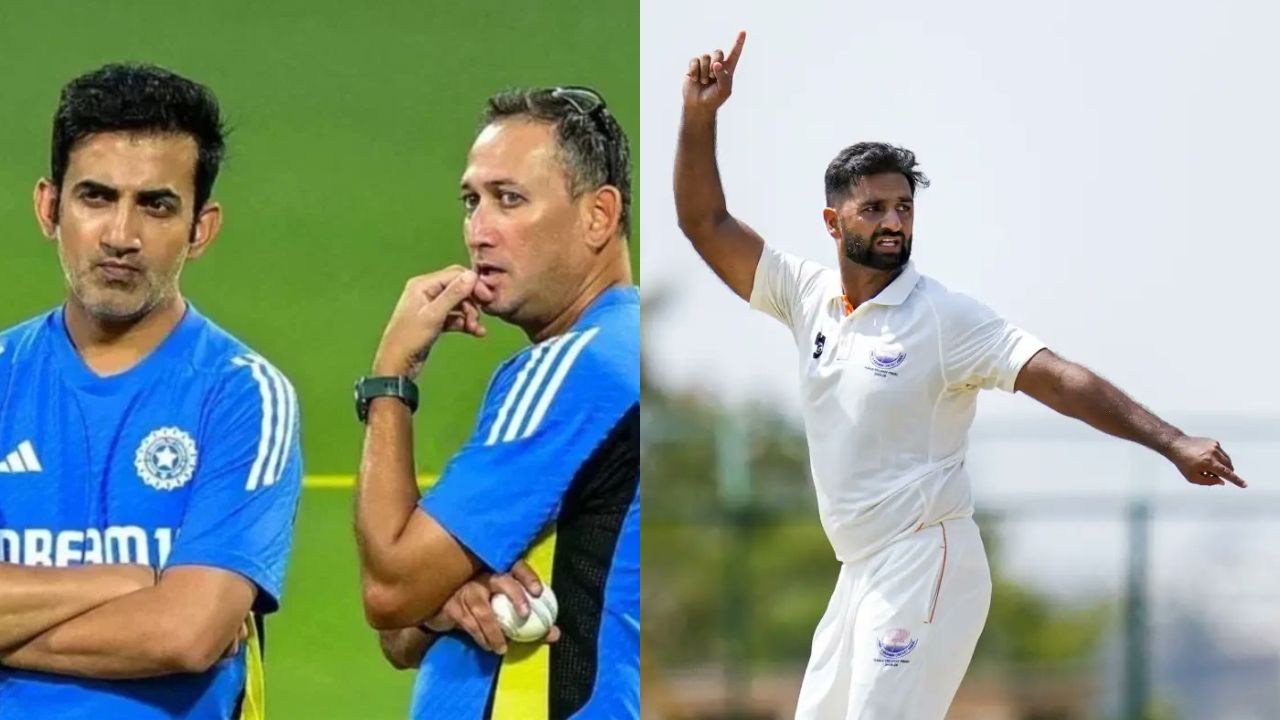
 Auqib Nabi took 60 wickets in Ranji Trophy 2025/26. (PC-AFP/X)
A Domestic Season to Remember
Auqib Nabi’s 2025/26 season was nothing short of remarkable. Representing Jammu and Kashmir, the 29-year-old right-arm pacer was instrumental in his state’s journey to their maiden Ranji Trophy title. His statistics are nothing short of elite: 60 wickets in just 10 matches at a blistering average of 12.57. Such dominance in domestic red-ball cricket usually guarantees a call-up to the national setup, yet the selectors remain hesitant.
The Pace Factor and Selection Scrutiny
The hesitation stems from a fundamental requirement for international fast bowlers. According to reports, including insights from journalist Kushan Sarkar, the primary concern regarding Nabi is his bowling speed. While his accuracy and ability to extract movement have been lethal on domestic tracks, the BCCI hierarchy reportedly questions whether his pace is sufficient to challenge batters at the Test level.
“Auqib Nabi has 60 wickets, but his pace isn’t something that has impressed one and all. Even if he makes the 15-member squad, a Test debut is a long shot,” sources close to the selection committee have indicated. This suggests that even if Nabi is rewarded with a squad spot, his chances of playing ahead of established names like Mohammad Siraj or Prasidh Krishna remain slim.
Grooming the Future: Brar, Yadav, and Tyagi
The selection headache is further complicated by the need to balance current requirements with long-term grooming. Alongside Nabi, Gurnoor Brar is frequently mentioned as a potential prospect. While Brar has seen limited red-ball action recently, the BCCI views him as a long-term fast-bowling asset.
Meanwhile, the white-ball setup presents its own set of challenges. Emerging talents like Prince Yadav and Kartik Tyagi have caught the eye during the IPL 2026 season. While both missed out on the India A squad for the Sri Lanka Tri-Series, they remain firmly in the conversation for the ODI format. Their inclusion could be critical as the BCCI begins to shape the team for the 2027 ODI World Cup.
Structural Changes and Management Headaches
Beyond the selection of pace bowlers, the BCCI is currently navigating several high-stakes decisions. The upcoming series against Afghanistan is expected to be a testing ground for various players, with the future of senior veterans like Virat Kohli and Rohit Sharma being closely monitored as the team looks toward the next World Cup cycle.
Furthermore, fitness concerns remain a persistent theme for the Indian team management. Hardik Pandya’s ongoing back issues continue to force the selectors to explore alternatives, while reports suggest shifts in the wicketkeeping hierarchy, with Ishan Kishan potentially replacing Rishabh Pant in the backup order. The board’s commitment to separating formats remains a guiding principle, ensuring that performances in one arena are not automatically equated with readiness for another.
Conclusion
As the countdown to the series against Afghanistan continues, the situation surrounding Auqib Nabi highlights the complex nature of Indian cricket selection. While 60 wickets in a title-winning Ranji campaign is an objective triumph, the selectors are tasked with looking beyond the raw numbers to evaluate the suitability of a player’s profile against the global standard. Whether Nabi earns his maiden international cap or remains a dominant domestic force, his journey serves as a reminder of the immense pressure and high standards inherent in representing India at the highest level.